1. März 2018 | Geschichte
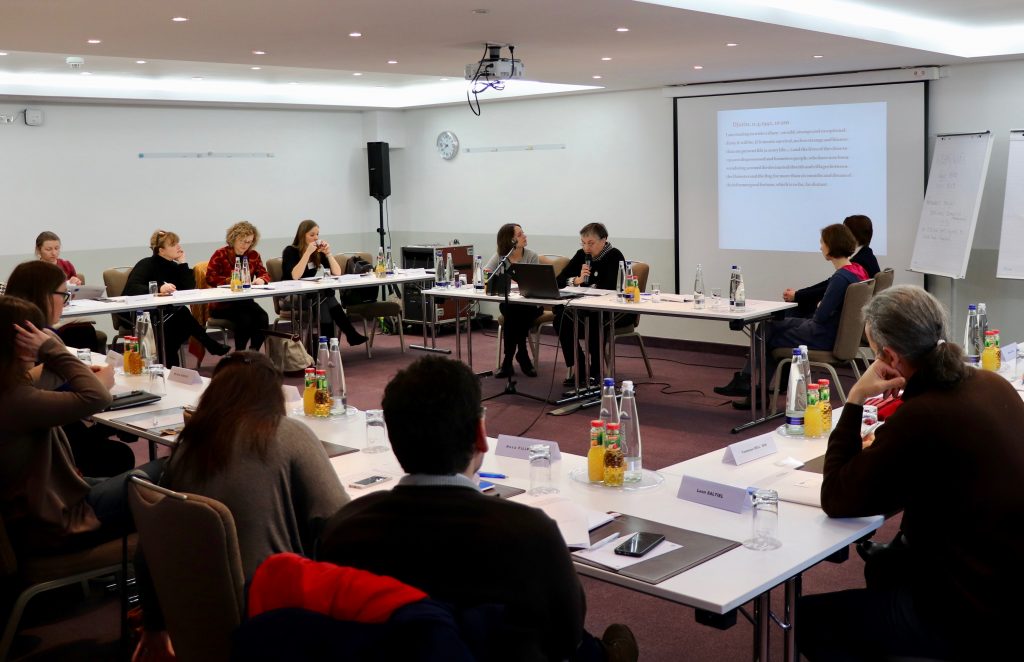
Foto: Zentrum für Holocaust-Studien am Institut für Zeitgeschichte München / Kerstin Schwenke
Von 7. bis 9. Februar 2018 lud das Zentrum für Holocaust-Studien am Institut für Zeitgeschichte nach München zum internationalen Workshop „The Holocaust in the Borderlands: Interethnic Relations and the Dynamics of Violence in Occupied Eastern Europe“. Dazu erschienen Wissenschaftler aus der ganzen Welt, um sich über den Holocaust in Mittel- und Osteuropa auszutauschen.
Die Eröffnung des Workshops fand am Mittwochabend im Senatssaal der Ludwig-Maximilians-Universität München (LMU) statt. Doris Bergen, „Chancellor Rose and Ray Wolfe Professor of Holocaust Studies“ an der Universität Toronto, hielt dort den für die Öffentlichkeit zugänglichen Eröffnungsvortrag zum Thema „Saving Christianity, Killing Jews: German Religious Campaigns and the Holocaust in the Borderlands“, der in Kooperation mit dem Lehrstuhl für Zeitgeschichte am Historischen Seminar der LMU stattfand. In ihrem Vortrag nahm sie ein Thema vorweg, das in den folgenden Tagen noch intensiv behandelt werden sollte: die Rolle lokaler Gesellschaften im Holocaust. Im Anschluss an den Eröffnungsvortrag begrüßten die Organisatoren vom Zentrum für Holocaust-Studien die Gäste, bevor der Abend zu seinem informellen Abschnitt gelangte, der Raum zum Gedankenaustausch bot.
Am folgenden Tag trafen sich die Teilnehmer zum Workshop im Münchner Hotel Dolomit. Sieben Panels und eine Podiumsdiskussion standen auf dem Programm für die nächsten beiden Tage. Vonseiten der Organisatoren begrüßten Gaёlle Fisher und Caroline Mezger noch einmal die Anwesenden. Fisher umriss in ihrem Einleitungsvortrag das Thema der Veranstaltung und versuchte insbesondere, den Begriff „Borderlands“ näher zu verorten und herauszustellen, welche Chancen diese Perspektive der Holocaustforschung eröffnet. Mezger stellte im Anschluss ein erstes Fallbeispiel anhand der „Volksdeutschen“ in der Vojvodina vor und leitete damit zum eigentlichen Workshop über.
In Panel I ging es um multiethnische Gesellschaften und ihre sozialen Trennlinien. Grzegorz Krzywiec (Warschau) sprach über Grenzländer als multiethnische Räume einerseits und als Orte der „nationalen Revolution“ andererseits. Im Fokus standen für ihn die sich bildenden Trennlinien der Zwischenkriegszeit. Anhand der Entwicklung der neuen polnischen Rechten in den 1920er- und 1930er-Jahren verfolgte er den Aufstieg von Antisemitismus, Gewalt und Autoritarismus im polnischen Sanacja-Regime, der viele Geschehnisse der späteren Besatzungszeit erst ermöglichte. Anca Filipovici (Cluj-Napoca/Klausenburg) stellte einen zweiten Fall der Zwischenkriegszeit vor: die Entwicklung des rumänischen Nationalismus in der multiethnischen Bukowina. Sie zeigte, wie sich der Alltag an der Universität Czernowitz (ukr. Tscherniwzi) zu jener Zeit radikalisierte und sich eine neue nationale Elite zu bilden begann. Leon Saltiel (Thessaloniki) stellte im letzten Vortrag dieses Panels die Theorie vor, dass das osmanische Millet-System den Holocaust in Thessaloniki mit ermöglichte. Es waren seiner Meinung nach die sozialen Trennungen dieses Systems der osmanischen Selbstverwaltung, die in den 1940er-Jahren erneut wirksam wurden und die stille Akzeptanz des Holocausts unter den Christen der Stadt erklären.
Panel II lenkte den Fokus auf die Agenden der Besatzungsmächte. Tommaso Dell’Era (Viterbo) stellte dazu die Rolle Italiens in Albanien vor. Besonders betonte er in seinem Vortrag, wie wenig Italien in der Region als Besatzer gesehen werden wollte und die lokalen albanischen Behörden daher nicht unter Druck setzte, was die ethnischen Säuberungen an Juden, insbesondere aber auch an Slawen betraf. Die Unterschiede zu den von NS-Deutschland besetzten Teilen Europas seien hier klar erkennbar. Mirna Zakić (Ohio) nahm die deutschen Besatzer in der Vojvodina in den Fokus. Die Region wurde im Zweiten Weltkrieg einerseits zwischen Ungarn und dem faschistischen kroatischen Ustaša-Staat aufgeteilt. Ein dritter Teil allerdings, das Westbanat, stand de facto unter der Kontrolle der lokalen „volksdeutschen“ Gemeinschaften. Deren radikales Handeln erklärte Zakić damit, dass sie ihr „Deutschtum“ unter Beweis zu stellen versuchten und sich außerdem durch die jugoslawischen Partisanen und die serbischen Tschetniks bedroht sahen. Zum Abschluss des Panels zog Marianna Hausleitner einen Vergleich zwischen den deutschstämmigen Einwohnern der Bukowina und des Banats nach 1935. Während erstere umgesiedelt wurden, blieben letztere während des Weltkriegs in ihrem Land.
Panel III führte die Themen der beiden ersten Panels zusammen: Wie nutzten die Besatzungsmächte die bestehenden Teilungen der Gesellschaft für ihre Zwecke? Winson Chu (Milwaukee) stellte dazu den Fall der polnischen Stadt Łódź, damals von den Nationalsozialisten Litzmannstadt genannt, vor und zeigte, wie „Volksdeutsche“ und „Reichsdeutsche“ dort interagierten und welche Rolle den Deutschen der Region im Holocaust zukam. Deutschtum war nach Chus Ansicht durchaus fluide, und die Situation der Besatzung bot den „Volksdeutschen“ Chancen, obwohl ihr „Deutschtum“ in den Augen der Besatzer zweifelhaft war. Goran Miljan (Uppsala) betrachtete im Anschluss einen ganz anderen Fall: den des faschistischen Kroatien; darin die Frage, wie das dortige Ustaša-Regime sich die „neuen idealen Kroaten“ vorstellte. Insbesondere der Jugendorganisationen der Ustaša-Bewegung widmete Miljan seine Aufmerksamkeit, um sich so dem Holocaust in Kroatien zu nähern.
Im letzten Panel (IV) des ersten Veranstaltungstages ging es schließlich um die Frage nach Gewalt und Gewaltbereitschaft in den besetzten Gebieten: Wie konnte es zu diesen Ausbrüchen von Gewalt, nicht nur vonseiten der Besatzer, sondern auch der lokalen Bevölkerung kommen? Jason Tingler (Worcester/Massachusetts) stellte dazu den Fall der ostpolnischen Stadt Chełm vor, wo in der Zeit der deutschen Besatzung von allen Seiten – nicht nur vonseiten der Besatzungsmacht – enorme Gewalttätigkeit zu beobachten war. Diese alltägliche Gewalt zerstörte die interethnische Solidarität in der Region und führte zu immer mehr Ausschreitungen. Nevena Daković (Belgrad) betrachtete im Anschluss die Langzeitfolgen solcher Gewaltausschreitungen anhand des Massakers von Újvidék (srb. Novi Sad), wo Anfang 1942 ungarische Einheiten mit massiver Gewalt gegen mutmaßliche Partisanen in der Vojvodina vorgegangen waren. Daković zeigte, wie vielgestaltig dieses Ereignis nach dem Krieg in Filmen und Denkmälern aufgegriffen wurde, um unterschiedliche Bedeutungen zu transportieren – von Antifaschismus bis zu serbischem Nationalismus. Kateryna Budz (Kiew) führte den ersten Veranstaltungstag zu einem Abschluss und betrachtete in ihrem Vortrag die ukrainische griechisch-katholische Kirche und ihre Rolle im Holocaust. Diese verhielt sich in der Besatzungszeit nicht einheitlich, und während einige Kirchenvertreter gegen die Verfolgung der Juden protestierten oder diese schützten, schauten andere willentlich weg oder kollaborierten mit den deutschen Besatzern.
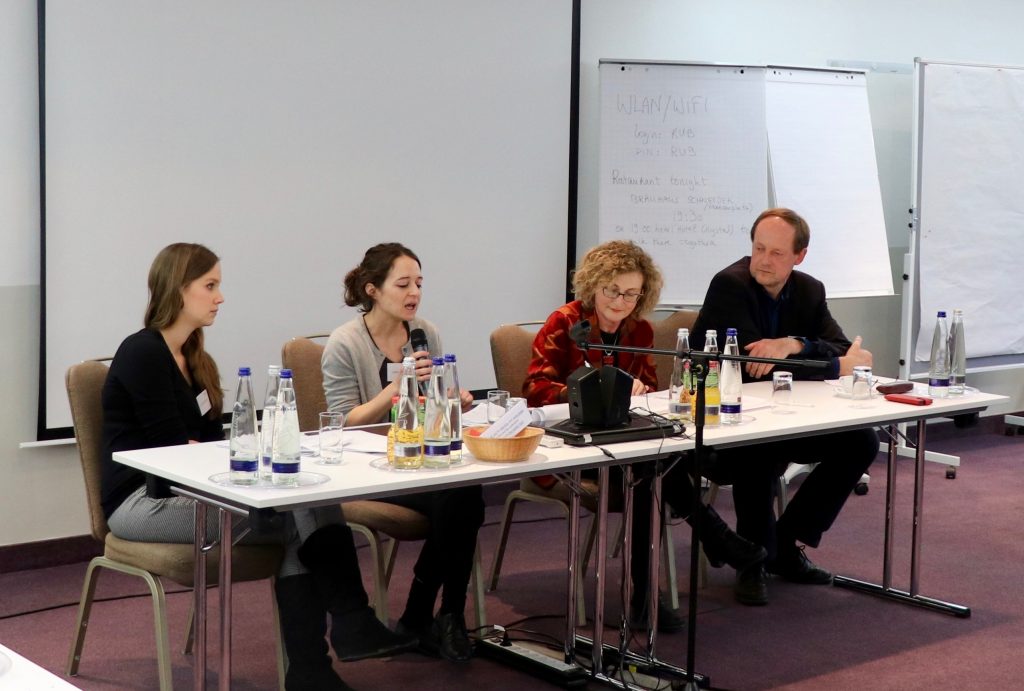
Die abschließende Podiumsdiskussion. Foto: Zentrum für Holocaust-Studien am Institut für Zeitgeschichte München / Christian Schmittwilken
Der letzte Veranstaltungstag startete mit Sarah Rosen (Jerusalem) und Panel V des Workshops, das sich den unterschiedlichen Narrativen des Holocausts in den besetzten „Borderlands“ widmete. Rosen stellte das Tagebuch des Lipman Kunstadt vor, der über die Besatzungszeit und den Holocaust im Djurin-Ghetto in Nordtransnistrien geschrieben hatte. Das Tagebuch zeigt eindrücklich die unterschiedlichen Beziehungen zwischen den Juden und Ukrainern der Region. Kooperation und Hilfestellungen waren alles in allem aber durchaus üblich, da beide Seiten unter der deutschen Besatzung zu leiden hatten und gemeinsame Interessen verfolgten. Svetalana Suveica (Regensburg) lenkte den Fokus auf das nahgelegene Bessarabien und zeigte, wie fundamental unterschiedlich die Lage dort war. Rumänische Beamte zogen in Bessarabien persönliche Vorteile aus der Besatzung und den anti-jüdischen Gesetzen und verschafften sich und ihren Freunden in vielen Fällen Zugang zum enteigneten jüdischen Besitz. Anna Wylegała (Warschau) zeichnete für Galizien ein ganz ähnliches Bild. Dort plünderten ukrainische und polnische Bewohner in vielen Fällen das Eigentum der lokalen jüdischen Bevölkerung und kooperierten zu diesem Zweck auch mit den deutschen Besatzern. In den Berichten jüdischer Überlebender sind diese Ereignisse sehr präsent, was zeigt, wie sehr dieses Verhalten ihrer Nachbarn von den Juden der galizischen Schtetl als Verrat angesehen wurde.
Panel VI griff dieses Thema auf und fragte, wie die verschiedenen lokalen Gruppierungen den Holocaust direkt nach Kriegsende auffassten und für sich verarbeiteten. Volha Bartash (Wien) betrachtete dazu die litauisch-belarussische Grenzregion aus der Sicht der dortigen Roma-Bevölkerung. Wie auch in anderen Gebieten war deren Beziehung mit den lokalen Bauern zwiegespalten und reichte von Zusammenarbeit und Hilfestellung bis zu Kollaboration mit den deutschen Besatzern. Diese Konflikte dauerten auch nach Kriegsende noch an. Olha Kolesnyk (Warschau) betrachtete im Anschluss eine grundlegend andere Zeit, 1939 bis 1941, als Lemberg (ukr. Lwiw) unter sowjetischer Besatzung gestanden hatte. Viele Juden waren in der Zeit aus den deutsch besetzten Gebieten nach Lemberg geflohen, und ihre Meinungen der Sowjetunion gegenüber waren oft auffallend positiv, wenngleich es auch kritische Stimmen gab.
Das letzte Panel (VII) der Veranstaltung ging der Frage nach, wie diese enorme Gewalt der Besatzungszeit nach 1945 kommuniziert wurde. Miriam Schulz (New York) untersuchte für diesen Zweck die jiddische Sprache und erläuterte, wie sie sich in dieser Zeit veränderte. In der sich wandelnden Sprache ist erkennbar, wie die jiddisch-sprechenden Juden ihre Nachbarn und den so häufigen Verrat wahrnahmen und den Holocaust selbst verarbeiteten. Irina Rebrova (Berlin) schloss mit einer Betrachtung der literarischen Aufarbeitung sowjetischer Prozesse gegen NS-Kollaborateure im Nordkaukasus. Sie zeigte, wie das Gedenken an die sowjetischen Opfer der Besatzung zur „autorisierten Erinnerung“ wurde, während die Vernichtung der lokalen jüdischen Bevölkerung kaum Erwähnung fand. In der sowjetischen literarischen Aufarbeitung der Besatzungszeit würden die Nationalsozialisten als „böse“, die Sowjetunion als „gut“ und alle Kollaborateure als „Verräter“ eingestuft. Für den Holocaust und die Juden sei in diesen Narrativen kaum Platz.
Zum Abschluss folgte am Freitagnachmittag eine Podiumsdiskussion, die die Themen des Workshops noch einmal beleuchten und genauer verorten sollte. Teilnehmer waren Frank Bajohr, Leiter des Zentrums für Holocauststudien, Doris Bergen, sowie die beiden Co-Organisatorinnen Gaёlle Fisher und Caroline Mezger. Bezogen auf die vorangegangenen Diskussionen stellte sich ihnen vor allem die Frage „Wo sind die Deutschen?“ – Die Besatzer selbst wurden in den Beiträgen der beiden Workshoptage kaum genannt, obwohl sie als treibende Kraft zu betrachten seien. Stattdessen lag der Fokus auf den vielen lokalen Akteuren in den besetzten Gebieten Osteuropas. Diese Tatsache zeige erneut, wie vielschichtig die Ereignisse der Zeit in dieser Region tatsächlich waren. Initialer Auslöser der Gewaltexzesse in den „Borderlands“ waren selbstverständlich die deutschen Besatzungstruppen. Es entwickelte sich aber eine Eigendynamik, die in diesem Workshop von vielen Perspektiven betrachtet wurde. Für Frank Bajohr sind diese Grenzregionen und ihre Verflechtungen ohnehin ein Themengebiet für sich, das nicht nur im Rahmen der Holocaustforschung Bedeutung habe. Doris Bergen stimmte ihm zu und stellte einmal mehr fest, dass wir eben noch lange nicht „alles über den Holocaust wissen“, wie im nichtwissenschaftlichen aber auch wissenschaftlichen Diskurs manchmal unterstellt werde. Die Untersuchung der Grenzregionen und ihrer lokalen Akteure stellten dies eindeutig unter Beweis. Caroline Mezger meint gar, dass je mehr wir über diese „Borderlands“ wüssten, umso mehr würden sie verschwimmen und nicht greifbar werden. Zu viel ist nach wie vor unbekannt, was die Rolle der lokalen Bevölkerung in den diversen Staaten Osteuropas betrifft. Umso wichtiger sei es, dieses „Schweigen der Archive“, wie Doris Bergen es nennt, zu brechen, neue Methoden, Quellen und Blickwinkel zu eröffnen und mehr über diese Zeit der Gewalt in diesem speziellen Raum zu lernen. Möglichkeiten dazu gebe es immer noch zur Genüge. Denn, wie Fisher feststellte, waren auch in diesem sehr vielschichtigen Workshop immer noch viele Stimmen und Perspektiven nicht repräsentiert: die der Frauen, zu großen Teilen die der Roma und viele mehr. Nein, wir wissen nicht alles über den Holocaust. – Das wurde Anfang Februar in München erneut deutlich.
Ralf Grabuschnig
14. Feb. 2018 | Call for Papers, Germanistik, Sprache
26. und 27. April 2018
Department für deutsche Sprache und Literatur der Babeş-Bolyai-Universität Klausenburg
Kultur kann eine Quelle von Distinktion, Abgrenzung, Konflikt oder aber ein Feld von Kontakt, Austausch, Diffusion und Integration sein.
Der Begriff Multikulturalität besitzt eine sozialpolitische Dimension, deren Tragweite nicht zu unterschätzen ist. Von ihr hängt ab, welche Bedeutung dem Terminus zugeschrieben wird: Die positive Bewertung multiethnischen Zusammenlebens, Anerkennung kultureller Unterschiede, das Einfordern von Verständnis, Akzeptanz und Respekt? Oder werden Assimilation und Identitätsverlust, Gewalt und Unterdrückung als unweigerliche Folgen multikultureller Gesellschaften befürchtet?
Von besonderer Relevanz waren Fragen zum multiethnischen, multikulturellen Zusammenleben stets in Siebenbürgen – einem Raum, in dem seit Jahrhunderten verschiedene Sprachen, Kulturen und Religionen nebeneinander existieren. So ist es auch nicht weiter verwunderlich, dass Hugo Meltzl und Samuel Brassai die erste komparatistische Zeitschrift überhaupt, Acta Comparationis, hier in Klausenburg publizierten: Dies ist ein frühes Beispiel dafür, wie oben genannte Fragen auch in die Literatur- und Sprachwissenschaft eingeflossen sind.
Beide Disziplinen erforschen, wie sich Fremdes begegnet und wie sich diese Begegnung mit dem Fremden in Literatur und Sprache niederschlägt. Dabei ist es notwendig, über Kulturgrenzen hinauszudenken. Dies stellt für uns als Germanistik in Klausenburg (Cluj, Kolozsvár) im Alltag wie in der Wissenschaft die Norm dar. Daher ist es für uns naheliegend, zu einer Tagung zum Thema Multikulturalität einzuladen.
Das Thema bietet vielfältige Fragestellungen in unterschiedlichen Disziplinen: Welche Rolle spielte und spielt Sprachenpolitik in Fragen des multikulturellen Zusammenlebens? Wie drücken sich interkulturelle Machtverhältnisse sowohl in der Sprachenpolitik als auch im alltäglichen Diskurs aus und wie können sie überwunden werden?
Welche Rolle kommt der Sprache zu, wenn es um Fragen der kulturellen Identität geht? Hier sind sowohl eigene Wahrnehmungen von Sprecher*innen wie Zuschreibungen von außen interessant – wenn es bspw. darum geht, wie Akzente wahrgenommen und klassifiziert werden.
Ein anderes Themenfeld wären Fragestellungen zu Mehrsprachigkeit: Welche Rolle, welcher Wert kommt ihr zu? Wie benutzen Sprecher*innen Code-Switching, und was sagt dies über die betreffenden Sprachen aus?
In der Literaturwissenschaft spielt nicht erst seit den Postcolonial Studies die Frage nach dem Anderen, Fremden eine Rolle – diese lässt sich auch auf Werke umlegen, die in multikulturellen Regionen entstehen oder solche thematisieren.
Inwiefern verfügen literarische Werke über eine ‚kulturelle Prägung‘, und was verraten die Inhalte und Motive darüber? Lassen sich Spuren der Mehrsprachigkeit, der multikulturellen Lebensrealität einer Autorin oder eines Autors einem Werk nachzeichnen?
Welchen Einfluss haben politische, soziale und kulturelle Rahmenbedingungen für ein literarisches Werk? Wie wird also Literatur in einer multikulturellen Gesellschaft produziert, rezipiert und bewertet?
Fragestellungen dieser Art lassen sich natürlich nicht nur anhand literarischer Texte abhandeln; sie haben ihren Weg auch in die Theater-, Film- und Medienwissenschaft gefunden. Auch damit werden wir uns auseinandersetzen. Wie präsentieren, thematisieren oder reflektieren Theaterstücke, Filme und Medienerzeugnisse Multikulturalität?
Nicht von minderer Bedeutung sind diese Aspekte auch in der Didaktik: Wie werden hier die Forschungsergebnisse der genannten Disziplinen aufgegriffen? Werden didaktische Materialien einer multikulturellen Realität gerecht?
Diesen und ähnlichen Fragen gehen wir bei der Tagung nach, die am 26. und 27. April 2018 am Department für deutsche Sprache und Literatur der Babeş-Bolyai-Universität Klausenburg stattfinden wird.
Anmeldungen bis zum 30. März 2018 mit einem Abstract an laura.laza@gmx.de.
Die Beiträge werden in einem Tagungsband erscheinen.